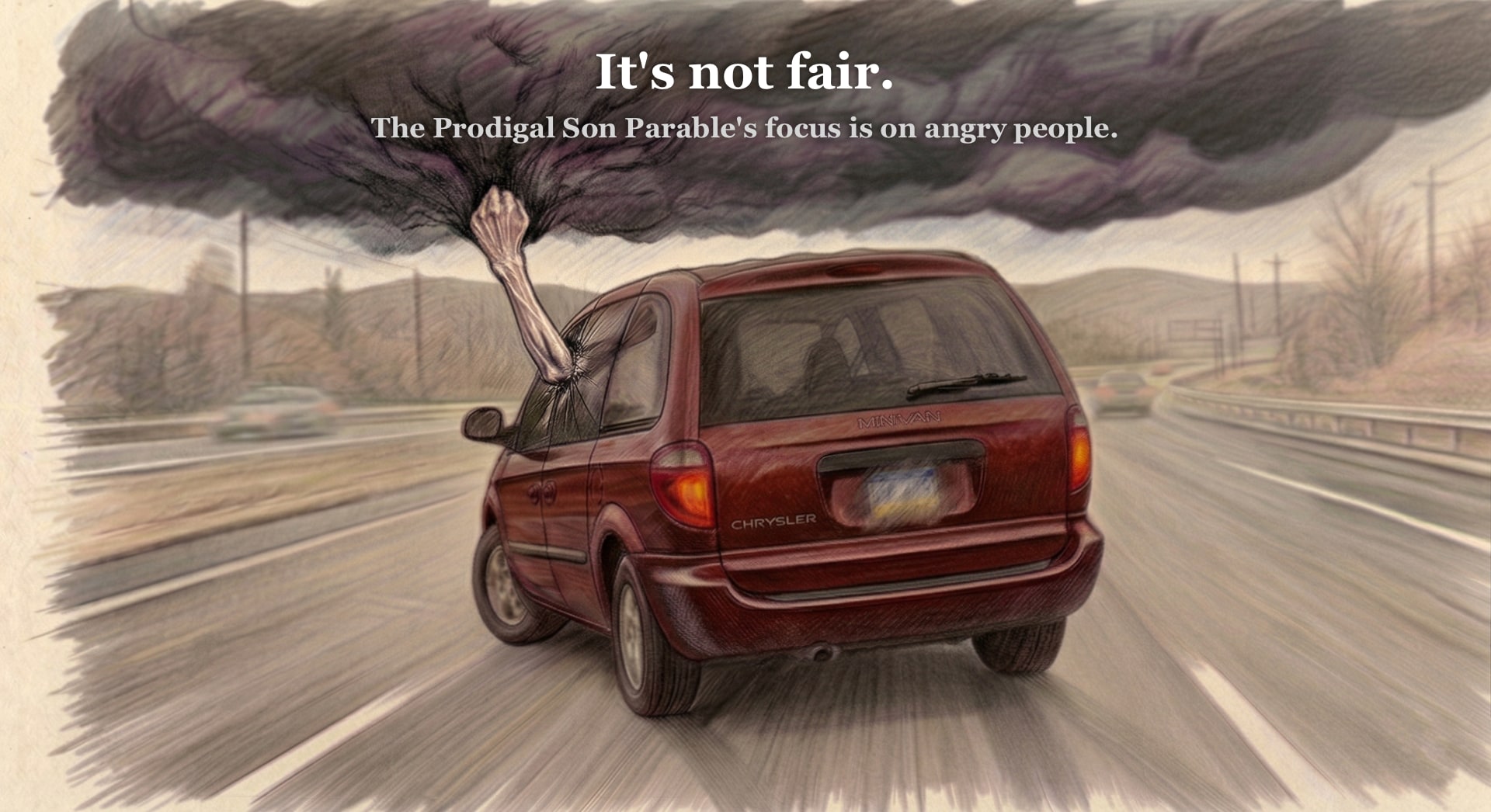
I raised my fist at God, Jesus, and my dad. God was two-faced — murderous to most in the Old Testament, loving to a few in the New. My pastor dad was two-faced too.
Can I trust both God and Jesus? That question has had a grip on me for 50+ years.
No one has helped me more than Dr. Kenneth Bailey, who lived and taught as a biblical scholar in the Middle East for over forty years. I first met him through his books, then in person, then we became penpals for over ten years. The prodigal son parable was Bailey’s favorite topic and mine.
Bailey helped me to breathe again. I’d like to show you why.
The Prodigal Son Parable
Characters
Younger Son = Sinners
Older Son = Pharisees (and leaders)
Father = God/Jesus
I’m the older brother in the prodigal son parable, the Pharisee.
I’m the older brother in my family.
When I was a kid, dad would say to me, “Your sister doesn’t want to be in heaven if you’re there.” She would get the smile. I would get the sneer. I believed that Jesus felt the same about the younger and older.
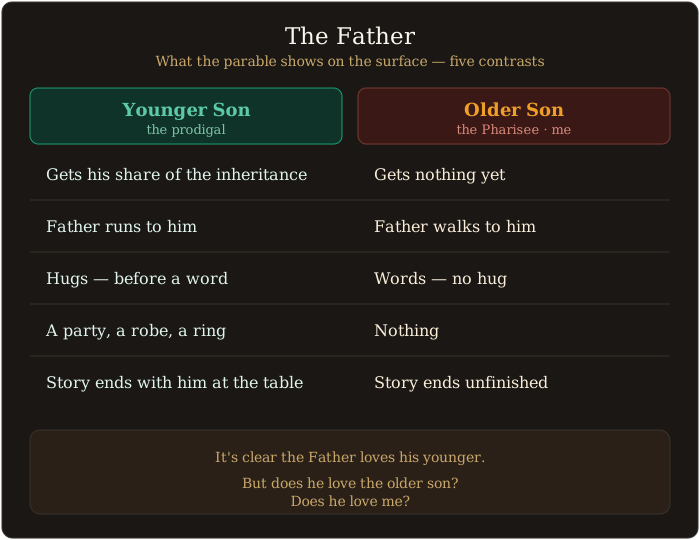
It’s clear that the Father loves his younger. But my most pressing question was, “Does Jesus love the older son. Does he love me?”
Bailey showed me that the parable was specifically told to the Pharisees, the older brother. He pointed out that of the eight times the word “son” appears in the prodigal parable, the father directed the most special word for “son” when the older son was most angry at his Father. The Father called him “teknon,” the Greek word for son that embodies tenderness. It’s the same word Mary called her son Jesus, when she found him at the temple after three days of searching.
Bailey’s insight changed my picture of Jesus. However, with my dad, when I was at my most angry, he’d press exactly where it wasn’t an accident — “your sister just has a better way with words.”
God’s Wrath
To my mind, Jesus played favorites. But at least He wasn’t murderous like God, who commanded that stubborn and rebellious sons must be stoned in the Old Testament.

In church, I’d show this passage to anyone who’d look. I remember this 70-ish old lady came up to me. She reached for my hands. I recoiled, embarrassed by my sweaty hands. She reached again and firmly held my hands, and said warmly, “You just gotta have faith.” I appreciated her kind eyes, but God was cold.
Years later, I dug deeper into this passage. Bible scholars were trying to comfort their readers: In all of Jewish recorded history, that command was never carried out. In fact, rabbis recoiled from the thought of stoning their own children. Over time, they surrounded that law with so many conditions that it became impossible to apply — until they finally concluded:
“There never was and never will be a stubborn and rebellious son.” — Babylonian Talmud, Sanhedrin 71a
To my mind, if anything, this showed rabbis were more loving than God. The rabbis’ rules rescued their wayward sons from a wrathful God.
The Perfect Parable
I don’t know why it took me so long to connect God’s Deuteronomy 21 command with Jesus’ Luke 15 parable. I do remember, however, how it happened. I inserted “prodigal” for each occurrence of “son” in Deuteronomy 21:18–21. It was a match! The prodigal definition was the same in both the Old Testament and the New Testament.
Jesus did the exact opposite of what’s commanded in the Old Testament.
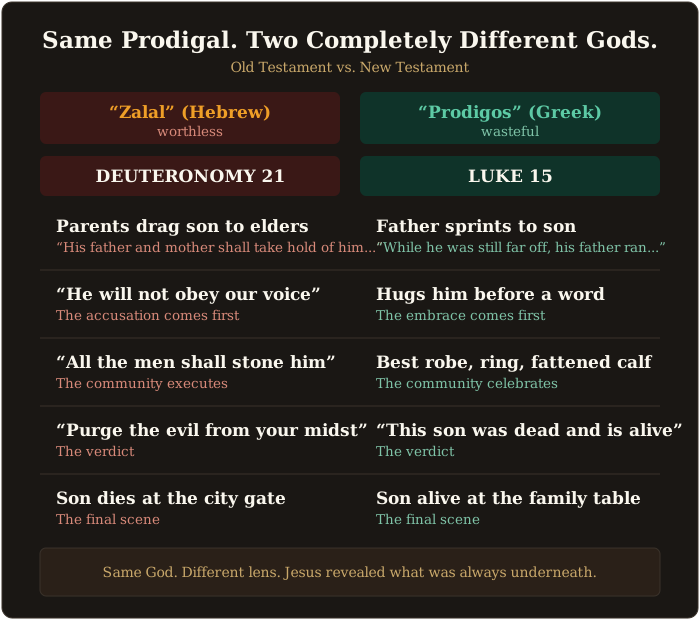
Finally, this gave me a chance to answer my question, “Can I trust both God and Jesus?”
If Jesus is the mirror image of God, and the two views of God and Jesus are the complete opposite — something had to give. It was my make-or-break moment.
I was open — even hoping — to change my picture of God/Jesus.
Here’s what I found.
→ Prodigal Insights — the deeper thread
→ Prodigal Text — the verses and cards
Enter the parable
Three ways to experience the story Jesus told
Prodigal Insights
38 years sitting with this parable. Here’s what I gleaned from Bailey.
Prodigal God
Did the older brother join the banquet? Saul, the “Pharisee of Pharisees,” lived the parable’s missing ending. Hear it in “Prodigal God — Arresting Affection.”
Resources
A four-part series I recorded at Dr. Kenneth Bailey’s home, plus the books that shaped this site.
Prodigal Text
The verses, the cards, the source.
You open my fist into a hand I never knew
— Other Brother, Outro